Dignity Doesn’t Retire
“Aren’t you just the sweetest? Just as cute as they come,” said Mary. She was smiling — but I was dismayed.
Mary wasn’t talking to a dog or a child. She was a caregiver in a nursing home, and she was talking to my elderly grandmother.
Can you imagine? A woman who’d been a true force of nature. Courageous and talented, she’d re-made herself in her 50’s out of necessity, starting from nothing.
My grandmother was brilliant and inspiring, and she’d held a very special place in my heart since my childhood.
Do you have a Munchie?
In a minute, I’ll get back to my grandma Munchie (nicknamed by my dad because she always had treats and snacks to munch on).
But first I have to say hello. I’ve been on a hiatus from my blog, but now I’m back. I think many of us have a “Munchie” in our lives — or maybe we are Munchie.
So please come along with me as I share where my mind and heart have been during my break. I’d love for you to know what compelled me to come back, and what I’ll share in the future.
Are we not people?
Munchie declined in her later years and was moved into a nursing home. I was in my 30’s and visiting her when I encountered Mary, the care aide who barged into the room during a sensitive conversation. She briskly declared it was time to move my grandmother for an activity.
We all understand care routines must be followed, right?
But the way Mary treated my grandmother had troubled me. She never once acknowledged my presence — and she was condescending toward my grandmother. She spoke over her. Ignored everything she said. She simply moved her into a wheelchair as quickly as possible.
As we exited the room, I saw Mary knowingly roll her eyes at a coworker who had another resident in a wheelchair. She sighed: “I’ve got mine … you’ve got yours … let’s go…”
I thought: Wait, what is this? Are we not people?
The entire interaction showed a profound lack of respect. Is this what old age comes to? Erasure? Treating people like widgets?
Maybe you’ve encountered a Mary in your life, too.
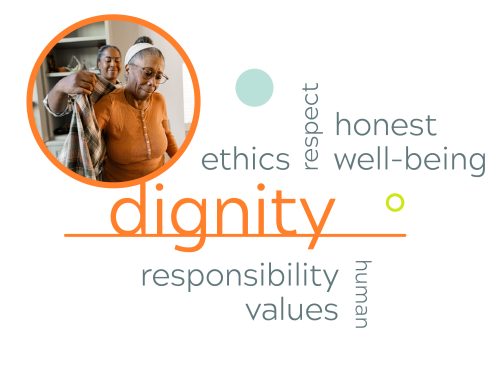
We don’t have to bash Mary — she wasn’t a bad person. I truly believe she’d never been trained or shown how to treat the residents as people, with the dignity they deserved —human beings who happen to have gotten older.
But I never forgot that day.
What happens when it’s my turn?
I wonder if that moment changed something in me. At the time, I thought I was just angry — angry at Mary, at the system, at how we treat our elders. But looking back now, I think something deeper was planted. A question I wasn’t ready to face yet: What happens when it’s MY turn?
People say, “where did the time go?” — but really! While away from this blog, I looked in the mirror and discovered I’m 65 years old. I sure don’t feel it. Inside, I’m not a day over 45 … but undeniably, I’m aging.
At the same time, I’ve seen some friends, family and coworkers decline in their later years, and I’ve said goodbye. It’s the way life goes, but it’s no less sad.
All of this has made me think — uncomfortably — about the future. How will my own body change? What will my needs be? What will my care experiences be? Will I too be talked over, dismissed, becoming invisible long before I must?
Maybe you’ve confronted these questions, too.
Losing friends, family members and relatives, and confronting my own mortality got me thinking — deeply — about eldercare practices in our country. Have we made any progress in treating our elders with greater grace, respect and dignity, no matter what their physical or mental condition may be?
What kept me up at night
So, during my time away, I found myself pulled deeper into questions I couldn’t shake. I talked to many people working in eldercare facilities to understand their world. I searched my own heart.
The picture became clear. Many more people are going to need services in the coming years — and there aren’t enough caregivers. Further, caregivers aren’t typically trained on the human side of interacting specifically with older people.
I felt a new mission emerging, both personally and professionally.
In 2024, I’d sold ProSolutions Training, a division of our company Care Solutions, but now there was an opportunity to shift our focus to training people who care for the elderly — whether in residential facilities, private homes or community-based programs. We have all the expertise, technology and passion we need!
When you think about it, so many people interact with older people in care: not only the personal care aides and home health aides, but also environmental services, food services, and even upper management. It’s an ecosystem centered on people who’ve lived long, full lives with much still to give.
This story is everyone’s
Now I know there’s a good reason my difficult experience with my grandmother’s care stayed with me all these years. It’s become my touchstone for my new direction and the legacy I want to leave.
I’m determined to bring a new kind of training to the field. While we’ll cover the key skills, we’ll also model and teach “eldercare people skills” throughout. This is good for everyone — because older adults who feel seen and respected are also likely to respond better to their caregivers. Because it must be said: it’s not always easy to provide care for folks in their later years.
I truly believe my story is not mine, it’s everyone’s. Because if we’re lucky enough to live long, we’re likely going to need care. And no matter your age, cherished seniors in your own life — family, mentors, people in your church or community — will also need care.
If this story is resonating in your heart and mind, I hope you’ll continue to join me here each month.
Seeking employee training for caregivers to the elderly? Visit us at https://caresolutionstraining.com/ .